Stained Glass Christmas Teddy Bear Review
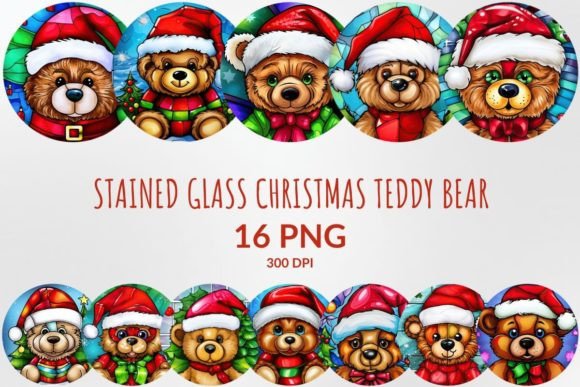
When I first opened the Stained Glass Christmas Teddy Bear, my initial reaction was one of immediate visual intrigue. As a designer who spends countless hours evaluating digital assets for real-world production, I rarely stop to admire the mood of a file before worrying about stitch counts and density. This design, however, demands attention. It is not merely an illustration; it is a statement piece that captures the warmth of the holidays through a unique, artistic lens. The concept of rendering a classic teddy bear in the style of stained glass immediately elevates the project from a standard holiday motif to something that feels bespoke and gallery-worthy.
The visual personality of the Stained Glass Christmas Teddy Bear is distinct. Unlike traditional embroidery files that rely on heavy shading or simple outlines, this design embraces bold lines and segmented color fields. It evokes the feeling of looking through a church window or a festive shop display during the winter season. For designers, crafters, and small business owners, this is a crucial distinction. It suggests that this machine embroidery design will perform best as a focal point rather than a subtle background element. The layout is balanced, with enough negative space around the edges to allow for creative framing without feeling cramped, making it an excellent candidate for various embroidery projects.
From Digital File to Finished Product: A Real-World Scenario
To truly understand the potential of the Stained Glass Christmas Teddy Bear, I like to visualize it in a specific context. Let's imagine a scenario where I am preparing a custom order for a boutique client. They need a limited-edition line of holiday gifts for their loyal customers. The brief calls for something high-end but approachable—items that feel handmade yet polished enough to command a premium price.
I decided to test the design on a heavyweight canvas tote bag intended for a holiday market stall. The goal was to create a tote bag design that would stand out on a crowded table. Upon hooping the fabric, I noticed how the clean lines of the Stained Glass Christmas Teddy Bear translated well to the textured surface of the canvas. The contrast between the dark outlining stitches and the vibrant fill areas created a depth that mimics the lead lines of actual stained glass. When I finished the run, the result was striking. The design did not look flat; instead, it had a dimensional quality that caught the light, exactly as intended.
This same logic applies to other custom apparel items. Imagine this design embroidered on the chest of a thick, cream-colored sweatshirt. The bold colors of the bear would pop against the neutral fabric, creating a cozy yet stylish look perfect for holiday embroidery. It transforms a generic garment into a personalized gift. For an Etsy seller or a small shop product owner, this level of visual interest is what drives sales. Customers are drawn to designs that tell a story or evoke a specific atmosphere, and this file delivers that atmosphere instantly.
Performance Across Different Fabrics and Applications
The versatility of the Stained Glass Christmas Teddy Bear is impressive, provided you understand its strengths. The design relies heavily on the interplay between different stitch types. The structural integrity comes from the satin stitch used for the outlines, which gives the image definition. The interior sections utilize a mix of fill stitch and potentially running stitch to simulate the translucent panes of glass.
For baby embroidery, such as on a onesie or a nursery pillow cover, this design works beautifully because the rounded shapes of the bear are soft and inviting. However, when considering commercial embroidery for items that require frequent washing, like aprons or kitchen towels, the density of the fill stitches becomes a critical factor. The design must be robust enough to withstand friction without pilling or losing its shape. If the stitch density is too high, the fabric may pucker, especially on thinner materials. If it is too low, the "glass" effect might look washed out.
I also tested the concept of using this file for embroidered patches. The bold outlines make it an ideal candidate for applique work or a dense patch design. The clear separation between color blocks means that even if the backing material varies, the image remains legible. This makes it a versatile asset for design assets libraries, suitable for everything from digital embroidery files for home machines to industrial setups for large-scale production.
Navigating Challenges and Limitations
No design is without its pitfalls, and the Stained Glass Christmas Teddy Bear requires careful handling in specific situations. One area where caution is needed is with small hoop sizes. While the overall composition is manageable, the intricate details within the "glass" panes can become muddy if the design is scaled down too much. On a tiny cap brim or a small pocket, the fine lines might merge, losing the crisp aesthetic that defines the style.
Fabric choice is another critical variable. Stretchy fabrics, such as jersey knits often used for t-shirts, can distort the geometric nature of the stained glass pattern. Without proper stabilization, the tension required to hold the threads in place might cause the fabric to warp, ruining the illusion of straight lines and sharp angles. Similarly, textured fabrics like heavy bouclé or loose-weave linens can obscure the detail. The thread colors need to be chosen with these textures in mind; lighter threads might get lost in deep weaves, while dark threads could bleed into the surrounding fabric.
Dark fabrics present a unique challenge. To achieve the true stained glass effect, the background needs to be visible or at least complement the colors. Embroidering this directly onto black fabric without a stabilizing underlay or a contrasting background layer might mute the vibrancy of the design. In such cases, a printable mockup or a test run on a scrap of the actual fabric is essential to ensure the final product meets expectations.
Practical Designer Notes for Success
Before committing to a full production run, I always advise testing the design on scrap fabric first. This step is non-negotiable for anyone serious about handmade products. You need to check the thread color contrast to ensure the "glass" segments are distinct. Review the stitch density in your software; if the fill areas are too packed, consider adjusting the settings to reduce bulk. Confirming the hoop size is appropriate for the garment type ensures the design sits correctly on the curve of a hat or the flat plane of a tote.
Inspecting small details is vital. Zoom in on the corners and intersections of the lines. Are they clean? Do they overlap correctly? Testing the design in black and white mockups can help you see if the value structure holds up without relying on color. Compare how it looks on light versus dark backgrounds to determine if you need to add a top-stitch or a specific stabilizer to enhance visibility.
Using the proper stabilizer is perhaps the most important technical step. For a design with so many linear elements, a cut-away stabilizer is often recommended to maintain the shape over time, especially for items like pillow covers or aprons that will be handled frequently. Always check whether the design works for both personal and commercial projects. Licensing terms vary, and understanding them protects your craft business from legal issues.
Ultimately, the Stained Glass Christmas Teddy Bear is a powerful tool for any creative entrepreneur. It bridges the gap between traditional holiday imagery and modern graphic design. By paying attention to fabric selection, stabilization, and stitch settings, you can transform this digital file into a stunning finished product that customers will cherish. Whether you are creating a personalized gift for a loved one or building a collection of small shop products, this design offers a professional touch that elevates your brand consistency and buyer engagement.